Building a new home is an exciting opportunity to design a space that perfectly suits your lifestyle—and that includes selecting the right HVAC (Heating, Ventilation, and Air Conditioning) system. Unlike replacing an old unit, new construction allows you to choose a system that is energy-efficient, cost-effective, and tailored to your home’s layout from the start.
In this guide, we’ll walk you through the key factors to consider when choosing the ideal HVAC system for your new build.
Understand Your Home’s Heating and Cooling Needs
Every home is different, and the size, layout, insulation, and location all play a major role in determining the right HVAC system.
Key factors include:
- Square footage of the home
- Number of floors
- Ceiling height
- Window size and placement
- Local climate conditions
A professional load calculation (often called a Manual J calculation) helps determine the exact heating and cooling capacity your home requires. Oversized or undersized systems can lead to inefficiency and discomfort.
Explore Different Types of HVAC Systems
There are several HVAC options available for new construction homes. Choosing the right one depends on your budget, climate, and preferences.
1. Split Systems
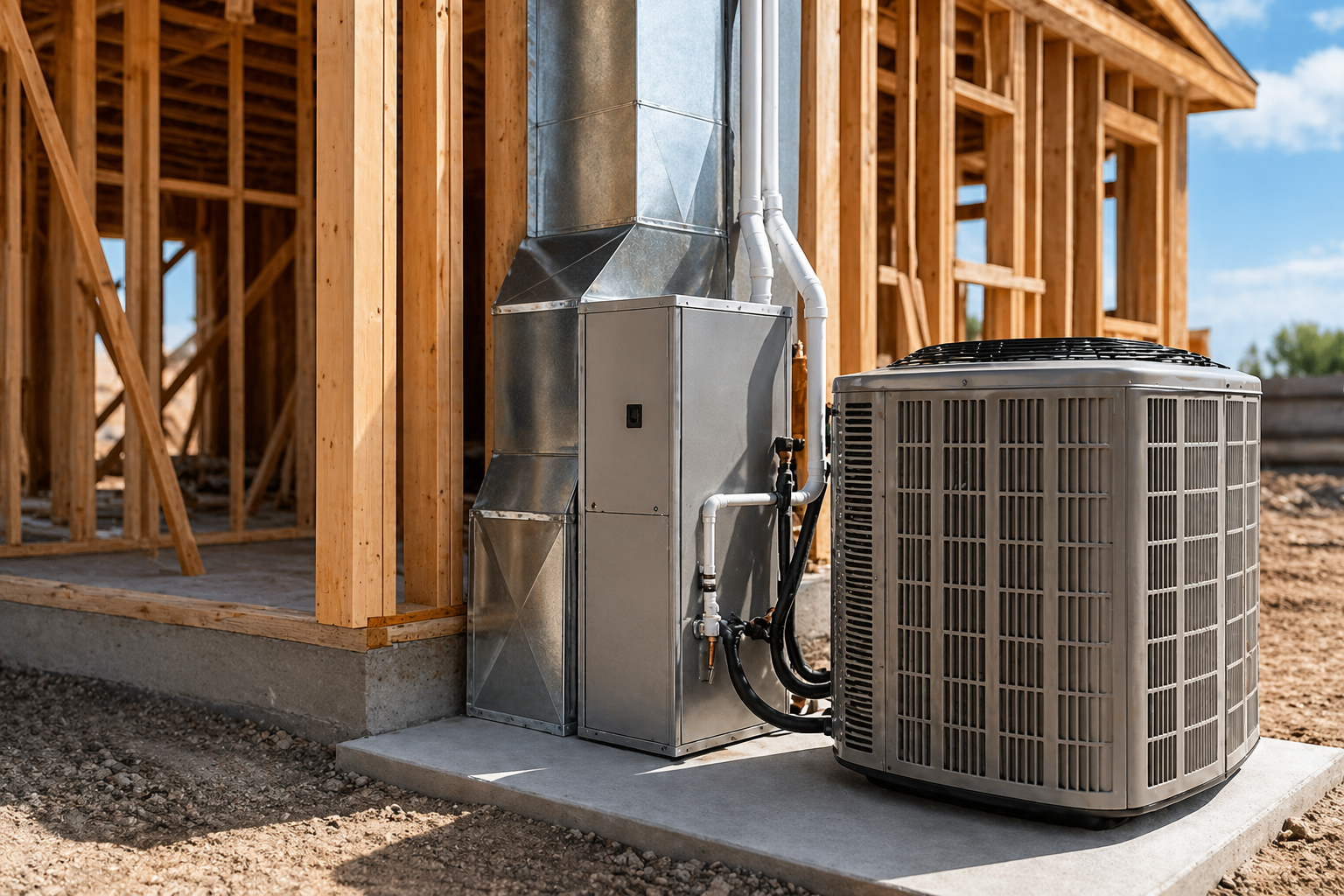
These are the most common systems, consisting of an indoor unit and an outdoor unit.
Best for: Traditional homes with ductwork
2. Ductless Mini-Split Systems
These systems don’t require ductwork and allow for zoned temperature control.
Best for: Energy efficiency and room-by-room control
3. Heat Pumps
Heat pumps provide both heating and cooling by transferring heat rather than generating it.
Best for: Moderate climates and energy savings
4. Packaged HVAC Systems
All components are housed in a single outdoor unit.
Best for: Homes with limited indoor space
Focus on Energy Efficiency
Energy efficiency is one of the most important considerations when selecting an HVAC system. A more efficient system may cost more upfront but can significantly reduce energy bills over time.
Look for:
- High SEER (Seasonal Energy Efficiency Ratio) ratings
- ENERGY STAR® certified systems
- Variable-speed motors for better performance
Investing in energy-efficient equipment also reduces your environmental impact.
Consider Ductwork Design
If your home will use a ducted system, proper ductwork design is essential. Poorly designed ducts can lead to uneven temperatures, energy loss, and higher utility bills.
Make sure:
- Ducts are properly sealed and insulated
- Airflow is evenly distributed throughout the home
- The system is designed during the construction phase
Think About Smart Technology
Modern HVAC systems often integrate with smart home technology, allowing you to control temperature, monitor energy usage, and schedule settings remotely.
Benefits include:
- Improved comfort and convenience
- Lower energy consumption
- Real-time system monitoring
Smart thermostats can be a valuable addition to any new HVAC setup.
Budget and Long-Term Costs
While it’s tempting to choose the cheapest option, it’s important to consider long-term value.
Factor in:
- Installation costs
- Energy savings over time
- Maintenance and repair expenses
- System lifespan
A slightly higher upfront investment can result in significant savings over the life of the system.
Work with a Qualified HVAC Professional
Choosing and installing an HVAC system is not a DIY task. Working with experienced professionals ensures that your system is properly sized, installed, and optimised for your home.
A qualified contractor can:
- Perform load calculations
- Recommend suitable systems
- Ensure proper installation
- Provide ongoing maintenance support
Final Thoughts
Selecting the right HVAC system for a new construction home is a critical decision that impacts your comfort, energy efficiency, and long-term costs. By understanding your home’s needs, exploring available options, and working with trusted professionals, you can make an informed choice that delivers reliable performance for years to come.
A well-designed HVAC system isn’t just an upgrade—it’s an investment in your home’s future comfort and efficiency.