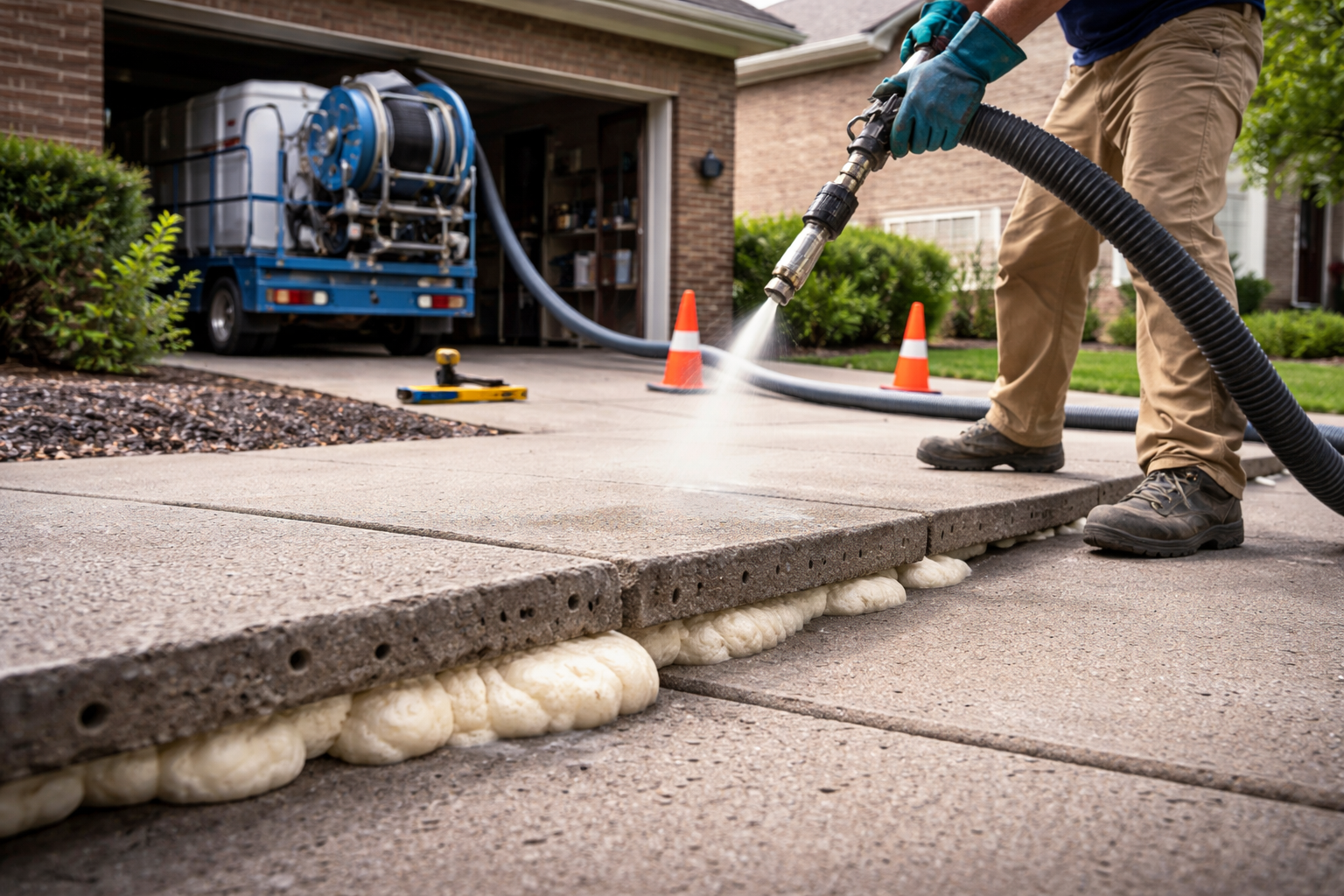
If you’re dealing with uneven concrete—whether it’s a sinking driveway, patio, sidewalk, or foundation—you’ve likely come across foam concrete lifting, also known as polyjacking. In 2026, this modern repair method continues to gain popularity due to its speed, durability, and cost-effectiveness. But how much does it really cost, and what factors affect pricing?
This guide breaks down everything you need to know about polyjacking costs so you can make an informed decision.
What Is Foam Concrete Lifting (Polyjacking)?
Foam concrete lifting, or polyjacking, is a repair process that uses high-density polyurethane foam injected beneath sunken concrete slabs. The foam expands, fills voids, and lifts the concrete back to its original position.
Compared to traditional mudjacking, polyjacking is:
- Faster and less invasive
- Lightweight yet strong
- Water-resistant and long-lasting
Average Polyjacking Costs in 2026
In 2026, the average cost of foam concrete lifting typically ranges between:
- $5 to $25 per square foot
- $500 to $3,500 per project (average residential jobs)
Typical Cost Breakdown:
- Small repairs (sidewalk sections): $500 – $1,200
- Medium areas (driveways, patios): $1,200 – $2,500
- Large or complex jobs (foundations, garages): $2,500 – $5,000+
Keep in mind that pricing varies based on location, contractor expertise, and site conditions.
Key Factors That Affect Polyjacking Costs
1. Size of the Area
Larger areas require more material and labor, increasing overall costs. However, the cost per square foot may decrease for bigger projects.
2. Severity of Damage
Deep sinking or heavily cracked slabs require more foam injection and preparation, raising the price.
3. Accessibility
Hard-to-reach areas or tight spaces may require specialized equipment or extra labor.
4. Soil Conditions
Unstable or eroded soil may need additional stabilization, increasing costs.
5. Location & Labor Rates
Costs vary depending on your region and local contractor pricing trends.
Polyjacking vs Mudjacking: Cost Comparison
| Feature | Polyjacking | Mudjacking |
|---|---|---|
| Cost per sq ft | Higher ($5–$25) | Lower ($3–$10) |
| Durability | High | Moderate |
| Cure time | Minutes | Hours to days |
| Weight | Lightweight | Heavy |
| Longevity | 10–20+ years | 5–10 years |
While polyjacking may cost more upfront, it often provides better long-term value due to durability and minimal maintenance.
Is Foam Concrete Lifting Worth the Cost?
In most cases, yes. Here’s why:
- Cost-effective alternative to replacement (which can cost 2–3x more)
- Quick turnaround—projects often completed in a few hours
- Minimal disruption to your property
- Long-lasting results with proper application
Hidden Costs to Watch Out For
While most quotes are straightforward, be aware of:
- Inspection or consultation fees
- Additional soil stabilization costs
- Crack sealing or surface repairs
- Permit fees (in some areas)
Always request a detailed estimate before starting the project.
How to Save on Polyjacking Costs
- Get multiple quotes from reputable contractors
- Schedule repairs during off-peak seasons
- Address issues early before they worsen
- Combine multiple repair areas into one project
Final Thoughts
Foam concrete lifting (polyjacking) remains one of the most efficient and reliable solutions for fixing uneven concrete in 2026. While costs can vary, the long-term benefits—durability, speed, and minimal disruption—make it a smart investment for homeowners and property managers alike.
If you’re noticing sinking or uneven concrete, acting early can save you thousands in future repairs. Always work with experienced professionals to ensure the best results and value for your money.
FAQs
1. What is the average cost of polyjacking in 2026?
The average cost of polyjacking in 2026 ranges from $5 to $25 per square foot, with most residential projects costing between $500 and $3,500 depending on size and complexity.
2. Is foam concrete lifting cheaper than replacing concrete?
Yes, foam concrete lifting is significantly cheaper than full concrete replacement, often costing 50–70% less while delivering long-lasting results.
3. How long does polyjacking last?
Polyjacking can last 10 to 20 years or more, depending on soil conditions, installation quality, and maintenance.
4. How long does the polyjacking process take?
Most polyjacking jobs are completed within a few hours, and the surface is usually ready for use almost immediately after the repair.
5. What factors affect foam concrete lifting costs?
Costs depend on area size, severity of damage, soil conditions, accessibility, and local labor rates.
6. Is polyjacking better than mudjacking?
Polyjacking is generally more durable, faster, and less invasive than mudjacking, though it may have a higher upfront cost.
7. Can all types of concrete be lifted using polyjacking?
Most concrete surfaces like driveways, sidewalks, patios, and garage floors can be lifted, but severely damaged or broken slabs may require replacement.
8. Are there any hidden costs in polyjacking?
Some projects may include additional costs for inspection, soil stabilization, crack repairs, or permits, depending on the condition of the site.
9. Is foam lifting environmentally friendly?
Yes, polyurethane foam used in polyjacking is lightweight, requires fewer materials, and minimizes waste compared to traditional methods.
10. When should I consider polyjacking?
You should consider polyjacking when you notice uneven surfaces, sinking slabs, pooling water, or trip hazards on concrete areas.