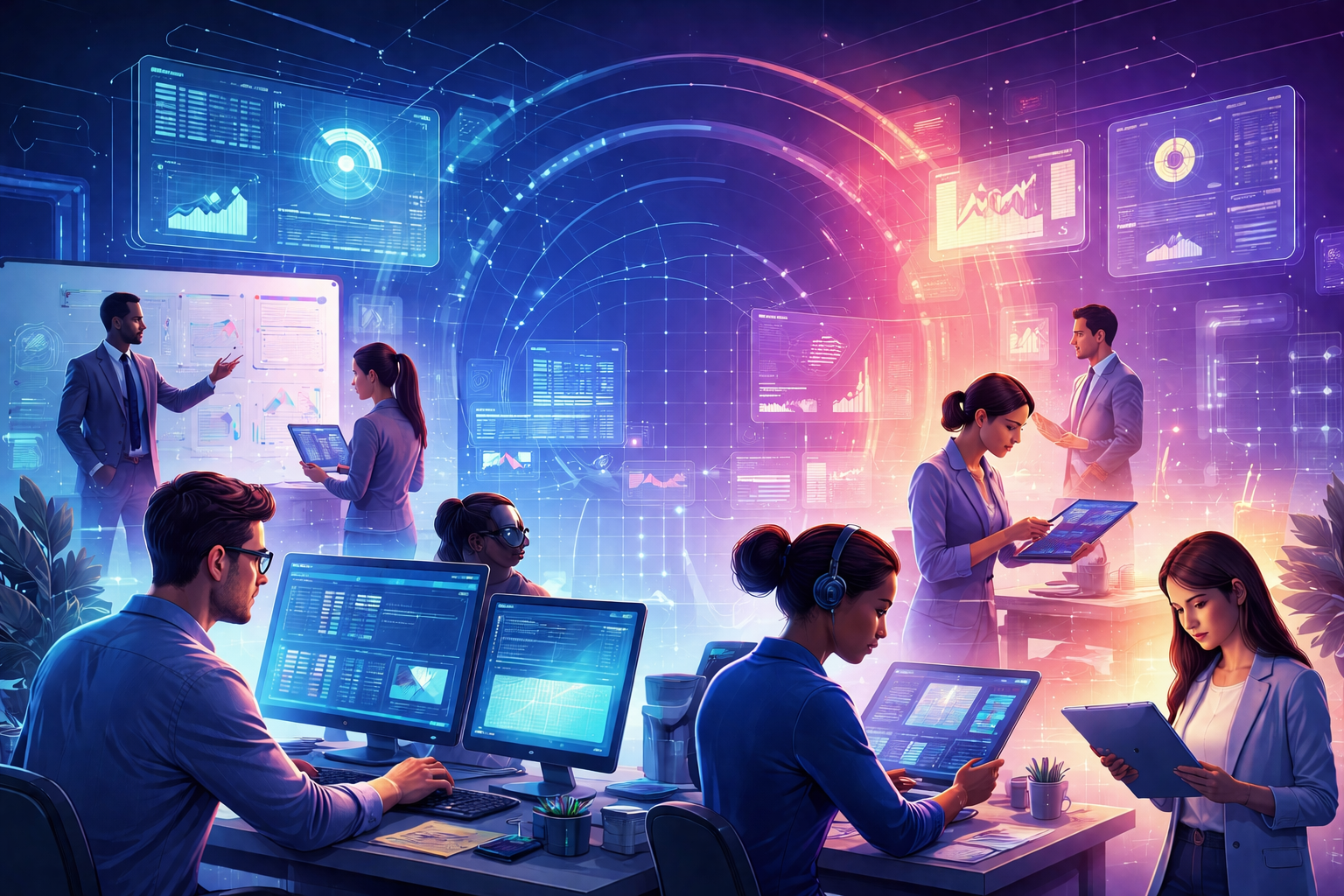
Artificial Intelligence (AI) is transforming the global workforce at an unprecedented pace. From automating repetitive tasks to enabling entirely new industries, AI is reshaping how we work, what skills are valuable, and what the future job market will look like. While some fear job losses, others see AI as a powerful tool for innovation and growth. The reality lies somewhere in between.
1. Automation and Job Displacement
One of the most discussed impacts of AI is automation. Machines and algorithms can now perform tasks that once required human effort—especially routine and repetitive work. Industries such as manufacturing, customer service, data entry, and transportation are already seeing significant automation.
For example:
- Chatbots are replacing basic customer support roles
- Automated systems handle data processing and analysis
- Self-driving technology threatens traditional driving jobs
This shift can lead to job displacement, particularly for low-skilled roles. However, history shows that technological advancements often replace certain jobs while creating new ones.
2. Creation of New Job Opportunities
AI is not just eliminating jobs—it’s also creating new ones. As businesses adopt AI technologies, they require skilled professionals to develop, manage, and maintain these systems.
New roles emerging due to AI include:
- AI and Machine Learning Engineers
- Data Scientists and Analysts
- AI Ethics Specialists
- Automation Consultants
Additionally, industries such as healthcare, education, and digital marketing are evolving, requiring workers to adapt and learn new tools powered by AI.
3. Shift in Skill Requirements
AI is changing the type of skills employers value. Routine manual and cognitive skills are becoming less important, while the demand for advanced technical and soft skills is increasing.
Key skills for the AI-driven future:
- Critical thinking and problem-solving
- Creativity and innovation
- Emotional intelligence and communication
- Digital literacy and AI understanding
Upskilling and reskilling are becoming essential for workers to stay relevant in this changing landscape.
4. Increased Productivity and Efficiency
AI enhances productivity by handling time-consuming tasks quickly and accurately. This allows employees to focus on more strategic and creative work.
For example:
- AI tools can analyze large datasets in seconds
- Marketing teams use AI for targeted campaigns
- Doctors use AI for faster diagnosis and treatment planning
This improved efficiency can lead to business growth, potentially creating more job opportunities in the long run.
5. Impact on Different Industries
AI affects industries differently:
- Healthcare: AI assists in diagnosis, drug discovery, and patient care
- Finance: Automated trading, fraud detection, and risk assessment
- Retail: Personalized recommendations and inventory management
- Education: AI-powered learning platforms and virtual tutors
While some sectors experience disruption, others benefit from innovation and expansion.
6. Ethical and Social Concerns
The rise of AI also raises important concerns:
- Job inequality and widening skill gaps
- Bias in AI algorithms affecting hiring decisions
- Privacy and data security issues
Governments and organizations must work together to ensure responsible AI use and fair employment practices.
7. The Future of Work
The future of work will likely be a collaboration between humans and AI rather than a competition. AI will handle repetitive tasks, while humans will focus on creativity, leadership, and complex decision-making.
Key trends shaping the future:
- Hybrid work environments with AI assistance
- Gig economy growth supported by AI platforms
- Continuous learning as a career necessity
Conclusion
AI is undoubtedly transforming the job market, bringing both challenges and opportunities. While some roles may disappear, many new ones will emerge, requiring a shift in skills and mindset. The key to thriving in an AI-driven world lies in adaptability, continuous learning, and embracing technology as a partner rather than a threat.
By preparing today, individuals and organizations can harness the power of AI to build a more innovative, productive, and inclusive future.