Author: Lynn Morre

  • The Smart Choice: Lead-Nickel-Free Jewelry Should Be Your Option

    The Smart Choice: Lead-Nickel-Free Jewelry Should Be Your Option

    Jewelery is more than just an accessory—it’s something you wear close to your skin every day. While style and design matter, what your jewellery is made of matters even more. Choosing lead-free and nickel-free jewelery isn’t just a trend—it’s a smart, health-conscious decision.

    In this blog, we’ll explore why switching to safer jewellery is essential for your skin, health, and overall well-being.

    What Does Lead-Free and Nickel-Free Mean?

    • Lead-free jewellery contains no lead, a toxic metal that can cause serious health issues.
    • Nickel-free jewellery is made without nickel, a common allergen that triggers skin irritation.

    These materials are often found in cheaper jewellery, especially in mass-produced accessories. Avoiding them ensures a safer wearing experience.

    The Hidden Dangers of Lead and Nickel

    1. Skin Allergies and Irritation

    Nickel is one of the leading causes of contact dermatitis—a condition that results in:

    • Redness
    • Itching
    • Rashes
    • Burning sensation

    If you’ve ever experienced discomfort from earrings, rings, or necklaces, nickel could be the culprit.

    2. Long-Term Health Risks

    Lead exposure, even in small amounts, can be harmful over time. It may:

    • Affect the nervous system
    • Cause fatigue and headaches
    • Be especially dangerous for children and pregnant women

    Wearing lead-containing jewellery regularly increases the risk of prolonged exposure.

    3. Poor Quality and Durability

    Jewellery containing harmful metals is often:

    • Lower in quality
    • Prone to tarnishing
    • More likely to break or discolor

    In contrast, lead-free and nickel-free jewellery is typically made with better materials like stainless steel, sterling silver, or gold plating.

    Benefits of Choosing Safe Jewellery

    ✔️ Hypoallergenic and Skin-Friendly

    Nickel-free jewellery is ideal for sensitive skin. You can wear it daily without worrying about irritation.

    ✔️ Safer for Everyday Wear

    Whether it’s earrings, bracelets, or rings, you can wear them all day without health concerns.

    ✔️ Better for Kids and Teens

    Children are more vulnerable to toxic exposure. Safe jewellery ensures peace of mind for parents.

    ✔️ Eco-Friendly Choice

    Many brands that offer lead-free jewellery also follow environmentally responsible manufacturing practices.

    How to Identify Lead-Free, Nickel-Free Jewellery

    When shopping, keep these tips in mind:

    • Check product descriptions for “nickel-free” or “lead-free” labels
    • Choose reputable brands with safety certifications
    • Look for materials like:
      • Surgical-grade stainless steel
      • Titanium
      • Sterling silver (925)
      • Gold (especially 14k or higher)

    Why It Matters More Today

    With the rise of fast fashion jewellery, many low-cost items still contain harmful metals. Being a conscious buyer helps you:

    • Protect your health
    • Invest in long-lasting quality
    • Support ethical brands

    Final Thoughts

    Jewelery should enhance your beauty—not harm your skin. By choosing lead-free and nickel-free jewelery, you’re making a decision that prioritizes both style and safety.

    In today’s world, smart fashion is safe fashion. So the next time you shop for jewellery, remember: what’s inside matters just as much as how it looks.

  • Largest Companies by Market Cap in 2026

    Largest Companies by Market Cap in 2026

    In 2026, the global corporate landscape is dominated by technology giants, with artificial intelligence (AI), cloud computing, and semiconductor innovation driving massive valuations. Market capitalization—calculated by multiplying a company’s share price by its total outstanding shares—remains the most important metric for ranking the world’s biggest companies.

    Let’s explore the largest companies by market cap in 2026, key trends, and what this means for the future of business.

    Top 10 Largest Companies by Market Cap (2026)

    Here are the leading companies globally based on approximate market valuations:

    1. NVIDIA – ~$4.3–4.8 trillion
    2. Apple – ~$4.0 trillion
    3. Alphabet – ~$3.6–3.8 trillion
    4. Microsoft – ~$3.0–3.5 trillion
    5. Amazon – ~$2.2–2.4 trillion
    6. Meta Platforms – ~$1.6 trillion
    7. Broadcom – ~$1.6 trillion
    8. Taiwan Semiconductor Manufacturing Company – ~$1.5 trillion
    9. Saudi Aramco – ~$1.5 trillion
    10. Berkshire Hathaway – ~$1 trillion+

    Notably, more than 70% of the top 10 companies belong to the technology sector, showing its dominance in the modern economy.

    Key Trends Shaping Market Cap Rankings

    1. AI Boom Driving Massive Growth

    Companies like NVIDIA have surged to the top due to their role in powering AI infrastructure. Their GPUs are essential for machine learning, data centers, and generative AI applications.

    2. Big Tech Continues to Dominate

    Firms such as Apple, Microsoft, and Amazon remain dominant due to diversified revenue streams including cloud computing, hardware, and digital services.

    3. Rise of Semiconductor Giants

    Chipmakers like Taiwan Semiconductor Manufacturing Company and Broadcom are increasingly valuable due to global demand for chips in AI, automotive, and consumer electronics.

    4. Energy Still Holds Ground

    Despite tech dominance, Saudi Aramco remains one of the most valuable companies due to consistent global energy demand.

    5. Digital Advertising Shift

    Companies like Meta Platforms are growing rapidly, even projected to surpass competitors in digital advertising revenue in 2026.

    Regional Insights

    • United States dominates the rankings with most top companies.
    • China and Taiwan play a key role through manufacturing and finance.
    • India, while growing, still trails behind global giants.

    🇮🇳 Top Indian Companies (for context)

    These companies are leaders in India but have smaller market caps compared to global tech giants.

    Why Market Cap Matters

    Market capitalization reflects:

    • Investor confidence
    • Growth potential
    • Industry dominance

    In 2026, over 10 companies have crossed the $1 trillion valuation mark, highlighting the scale of modern global businesses.

    Future Outlook

    Looking ahead:

    • AI and automation will continue reshaping rankings
    • Semiconductor and cloud companies will gain further importance
    • Emerging markets may produce new entrants in the top 20

    Final Thoughts

    The list of largest companies by market cap in 2026 clearly shows one thing: technology is the backbone of the global economy. From AI chips to cloud platforms and digital ecosystems, companies that innovate at scale dominate the rankings.

    For investors, marketers, and business leaders, tracking these companies offers valuable insights into where the world economy is heading next.

  • How AI Is Saving Time: Transforming Productivity in the Digital Age

    How AI Is Saving Time: Transforming Productivity in the Digital Age

    Artificial Intelligence (AI) is no longer just a futuristic concept—it’s a powerful tool that is actively saving time across industries and in everyday life. From automating repetitive tasks to enhancing decision-making, AI is helping individuals and businesses work smarter, faster, and more efficiently.

    1. Automating Repetitive Tasks

    One of the biggest ways AI saves time is by handling routine and repetitive work. Tasks that once took hours can now be completed in minutes.

    Examples include:

    • Email filtering and automated responses
    • Data entry and processing
    • Scheduling meetings and reminders

    AI-powered tools can work continuously without fatigue, allowing employees to focus on more meaningful and strategic tasks.

    2. Faster Data Analysis

    In today’s data-driven world, analyzing large volumes of information manually is time-consuming. AI can process and analyze massive datasets within seconds, providing insights that would otherwise take days or weeks.

    For instance:

    • Businesses use AI to track customer behavior
    • Financial institutions detect fraud instantly
    • Healthcare professionals analyze patient data quickly

    This rapid analysis leads to faster decision-making and improved outcomes.

    3. Smarter Communication

    AI is streamlining communication by making it quicker and more efficient.

    Common AI-powered solutions:

    • Chatbots that handle customer queries 24/7
    • Voice assistants that manage tasks hands-free
    • Real-time language translation tools

    These technologies reduce waiting time and improve user experience across platforms.

    4. Improved Workflow Efficiency

    AI tools integrate into workflows to optimize processes and eliminate bottlenecks. Project management, marketing, and operations have become more efficient with AI assistance.

    Examples:

    • Automated project tracking and updates
    • AI-generated content for marketing
    • Smart inventory management systems

    By reducing manual intervention, AI ensures smoother operations and faster completion of tasks.

    5. Personal Productivity Boost

    AI is also helping individuals save time in their daily lives.

    Everyday uses include:

    • Smart assistants managing calendars and tasks
    • AI-powered apps recommending content or products
    • Navigation apps providing real-time traffic updates

    These tools help people make quicker decisions and manage their time more effectively.

    6. Enhancing Creativity and Innovation

    Contrary to the belief that AI replaces creativity, it actually enhances it by saving time on groundwork. Designers, writers, and developers can use AI to generate ideas, drafts, and prototypes quickly.

    For example:

    • Content creators use AI for writing and editing
    • Designers generate concepts using AI tools
    • Developers speed up coding with AI suggestions

    This allows professionals to focus on refining ideas rather than starting from scratch.

    7. Reducing Human Error

    AI minimizes errors in tasks that require precision, such as calculations, data handling, and quality control. Fewer mistakes mean less time spent on corrections and rework.

    Conclusion

    AI is revolutionizing the way we manage time. By automating routine tasks, accelerating data processing, and improving efficiency, it allows individuals and organizations to achieve more in less time. Rather than replacing human effort, AI acts as a powerful assistant—freeing up time for creativity, strategy, and innovation.

    As AI continues to evolve, its ability to save time will only grow, making it an essential part of the future of work and everyday life.

  • The Impact of AI on Jobs: Opportunities, Challenges, and the Future of Work

    The Impact of AI on Jobs: Opportunities, Challenges, and the Future of Work

    Artificial Intelligence (AI) is transforming the global workforce at an unprecedented pace. From automating repetitive tasks to enabling entirely new industries, AI is reshaping how we work, what skills are valuable, and what the future job market will look like. While some fear job losses, others see AI as a powerful tool for innovation and growth. The reality lies somewhere in between.

    1. Automation and Job Displacement

    One of the most discussed impacts of AI is automation. Machines and algorithms can now perform tasks that once required human effort—especially routine and repetitive work. Industries such as manufacturing, customer service, data entry, and transportation are already seeing significant automation.

    For example:

    • Chatbots are replacing basic customer support roles
    • Automated systems handle data processing and analysis
    • Self-driving technology threatens traditional driving jobs

    This shift can lead to job displacement, particularly for low-skilled roles. However, history shows that technological advancements often replace certain jobs while creating new ones.

    2. Creation of New Job Opportunities

    AI is not just eliminating jobs—it’s also creating new ones. As businesses adopt AI technologies, they require skilled professionals to develop, manage, and maintain these systems.

    New roles emerging due to AI include:

    • AI and Machine Learning Engineers
    • Data Scientists and Analysts
    • AI Ethics Specialists
    • Automation Consultants

    Additionally, industries such as healthcare, education, and digital marketing are evolving, requiring workers to adapt and learn new tools powered by AI.

    3. Shift in Skill Requirements

    AI is changing the type of skills employers value. Routine manual and cognitive skills are becoming less important, while the demand for advanced technical and soft skills is increasing.

    Key skills for the AI-driven future:

    • Critical thinking and problem-solving
    • Creativity and innovation
    • Emotional intelligence and communication
    • Digital literacy and AI understanding

    Upskilling and reskilling are becoming essential for workers to stay relevant in this changing landscape.

    4. Increased Productivity and Efficiency

    AI enhances productivity by handling time-consuming tasks quickly and accurately. This allows employees to focus on more strategic and creative work.

    For example:

    • AI tools can analyze large datasets in seconds
    • Marketing teams use AI for targeted campaigns
    • Doctors use AI for faster diagnosis and treatment planning

    This improved efficiency can lead to business growth, potentially creating more job opportunities in the long run.

    5. Impact on Different Industries

    AI affects industries differently:

    • Healthcare: AI assists in diagnosis, drug discovery, and patient care
    • Finance: Automated trading, fraud detection, and risk assessment
    • Retail: Personalized recommendations and inventory management
    • Education: AI-powered learning platforms and virtual tutors

    While some sectors experience disruption, others benefit from innovation and expansion.

    6. Ethical and Social Concerns

    The rise of AI also raises important concerns:

    • Job inequality and widening skill gaps
    • Bias in AI algorithms affecting hiring decisions
    • Privacy and data security issues

    Governments and organizations must work together to ensure responsible AI use and fair employment practices.

    7. The Future of Work

    The future of work will likely be a collaboration between humans and AI rather than a competition. AI will handle repetitive tasks, while humans will focus on creativity, leadership, and complex decision-making.

    Key trends shaping the future:

    • Hybrid work environments with AI assistance
    • Gig economy growth supported by AI platforms
    • Continuous learning as a career necessity

    Conclusion

    AI is undoubtedly transforming the job market, bringing both challenges and opportunities. While some roles may disappear, many new ones will emerge, requiring a shift in skills and mindset. The key to thriving in an AI-driven world lies in adaptability, continuous learning, and embracing technology as a partner rather than a threat.

    By preparing today, individuals and organizations can harness the power of AI to build a more innovative, productive, and inclusive future.

  • Capgemini: Driving Digital Transformation in a Data-Driven World

    Capgemini: Driving Digital Transformation in a Data-Driven World

    In today’s rapidly evolving digital landscape, businesses need more than just technology—they need strategic partners who can guide them through transformation. Capgemini stands out as one of the world’s leading consulting, technology, and outsourcing firms, helping organizations innovate, scale, and stay competitive.

    About Capgemini

    Founded in 1967 and headquartered in Paris, France, Capgemini has grown into a global powerhouse with a presence in over 50 countries. The company provides end-to-end services across consulting, digital transformation, technology development, and business operations.

    With a strong focus on innovation and sustainability, Capgemini partners with enterprises across industries such as finance, healthcare, retail, manufacturing, and telecommunications.

    Core Services Offered by Capgemini

    1. Consulting Services

    Capgemini helps organizations define strategies for digital transformation, optimize operations, and improve customer experiences through data-driven insights.

    2. Technology & Engineering

    From cloud computing to software development, Capgemini builds scalable, secure, and future-ready digital solutions tailored to business needs.

    3. Cloud & Infrastructure

    The company supports cloud migration, hybrid infrastructure, and IT modernization to help businesses improve agility and reduce costs.

    4. Data & AI

    Capgemini leverages artificial intelligence, analytics, and big data to enable smarter decision-making and unlock new business opportunities.

    5. Business Process Outsourcing (BPO)

    Through intelligent automation and process optimization, Capgemini helps streamline operations and enhance efficiency.

    Capgemini’s Approach to Innovation

    Capgemini combines technology expertise with industry knowledge to deliver measurable results. Its innovation strategy focuses on:

    • AI and Automation to improve productivity
    • Cloud-first solutions for scalability
    • Cybersecurity to protect digital assets
    • Sustainability initiatives for responsible business growth

    The company also invests heavily in research and development to stay ahead of emerging trends.

    Global Presence and Workforce

    With over 350,000 team members worldwide, Capgemini is known for its diverse and inclusive work culture. Its global delivery model allows it to serve clients efficiently across regions while maintaining high-quality standards.

    India plays a major role in Capgemini’s operations, acting as a key hub for technology services and innovation.

    Why Businesses Choose Capgemini

    Proven Expertise

    Decades of experience across industries make Capgemini a trusted partner for large-scale transformation projects.

    End-to-End Solutions

    From strategy to execution, Capgemini provides comprehensive services under one roof.

    Client-Centric Approach

    The company focuses on understanding client needs and delivering customized solutions.

    Strong Partnerships

    Capgemini collaborates with leading technology providers like cloud platforms and enterprise software companies to deliver best-in-class solutions.

    Capgemini and the Future of Digital Transformation

    As businesses continue to embrace digital technologies, Capgemini is at the forefront of shaping the future. The company is actively working on next-generation solutions in areas such as:

    • Artificial Intelligence and Machine Learning
    • Internet of Things (IoT)
    • 5G and edge computing
    • Sustainable IT practices

    Its vision is to create a more inclusive and sustainable digital economy.

    Final Thoughts

    Capgemini has established itself as a global leader in consulting and technology services by consistently delivering innovation and value. Whether it’s helping enterprises migrate to the cloud, implement AI-driven solutions, or transform customer experiences, Capgemini continues to play a crucial role in shaping modern businesses.

    For organizations looking to thrive in the digital age, partnering with Capgemini can be a strategic step toward long-term success.

  • PolyLevel®: A Modern Solution for Cracked and Uneven Concrete

    PolyLevel®: A Modern Solution for Cracked and Uneven Concrete

    Cracked, uneven concrete surfaces—whether it’s your driveway, sidewalk, patio, or foundation slab—are more than just an eyesore. They can create safety hazards, reduce property value, and lead to costly repairs if left untreated. Fortunately, PolyLevel® offers a high-quality, efficient, and long-lasting solution for lifting and stabilizing sunken concrete.

    What Is PolyLevel®?

    PolyLevel is an advanced concrete lifting system that uses high-density polyurethane foam to raise and stabilize uneven concrete slabs. Developed as a superior alternative to traditional mudjacking, PolyLevel® is designed to deliver precise results with minimal disruption.

    The process involves injecting expanding foam beneath the concrete. As the foam expands, it fills voids, compacts loose soil, and gently lifts the slab back to its original position.

    Why Concrete Becomes Uneven

    Before understanding how PolyLevel® works, it’s important to know why concrete settles or cracks in the first place:

    • Soil erosion due to water runoff
    • Poor soil compaction during construction
    • Freeze-thaw cycles in colder climates
    • Heavy loads over time
    • Natural ground shifting

    These issues create empty spaces beneath the slab, causing it to sink or crack.

    Key Benefits of PolyLevel®

    1. Fast and Efficient Installation

    PolyLevel® installations are typically completed within a few hours. The material cures quickly, allowing surfaces to be used the same day.

    2. Lightweight but Strong

    Unlike traditional mudjacking materials, polyurethane foam is lightweight and doesn’t add extra stress to the soil beneath.

    3. Long-Lasting Results

    PolyLevel® is water-resistant and does not break down over time, making it a durable solution that can last for years.

    4. Minimal Disruption

    The injection process requires only small holes, preserving the appearance of your concrete and surrounding landscape.

    5. Environmentally Friendly

    The foam material is designed to be eco-conscious, reducing waste and minimizing environmental impact compared to full concrete replacement.

    PolyLevel® vs Traditional Repair Methods

    FeaturePolyLevel®MudjackingConcrete Replacement
    Installation TimeHours1–2 daysSeveral days
    DurabilityHighModerateHigh
    WeightLightweightHeavyHeavy
    CostModerateLowerExpensive
    DisruptionMinimalModerateHigh

    While concrete replacement may be necessary in extreme cases, PolyLevel® provides a cost-effective and less invasive alternative for most uneven concrete issues.

    Where Can PolyLevel® Be Used?

    PolyLevel® is versatile and can be applied to a variety of surfaces, including:

    • Driveways
    • Sidewalks and walkways
    • Patios
    • Garage floors
    • Pool decks
    • Foundation slabs

    Its adaptability makes it a preferred solution for both residential and commercial properties.

    Is PolyLevel® Worth It?

    For homeowners and property managers dealing with uneven concrete, PolyLevel® offers an excellent balance of cost, performance, and convenience. Instead of tearing out and replacing entire slabs, this method restores existing concrete quickly and efficiently.

    Final Thoughts

    Uneven concrete doesn’t have to mean expensive replacement or long repair timelines. With PolyLevel®, you get a modern, reliable solution that lifts, stabilizes, and extends the life of your concrete surfaces.

    If you’re noticing cracks, sinking, or uneven slabs, addressing the problem early with PolyLevel® can save you time, money, and hassle in the long run.

  • Foam Concrete Lifting Costs in 2026

    Foam Concrete Lifting Costs in 2026

    If you’re dealing with uneven concrete—whether it’s a sinking driveway, patio, sidewalk, or foundation—you’ve likely come across foam concrete lifting, also known as polyjacking. In 2026, this modern repair method continues to gain popularity due to its speed, durability, and cost-effectiveness. But how much does it really cost, and what factors affect pricing?

    This guide breaks down everything you need to know about polyjacking costs so you can make an informed decision.

    What Is Foam Concrete Lifting (Polyjacking)?

    Foam concrete lifting, or polyjacking, is a repair process that uses high-density polyurethane foam injected beneath sunken concrete slabs. The foam expands, fills voids, and lifts the concrete back to its original position.

    Compared to traditional mudjacking, polyjacking is:

    • Faster and less invasive
    • Lightweight yet strong
    • Water-resistant and long-lasting

    Average Polyjacking Costs in 2026

    In 2026, the average cost of foam concrete lifting typically ranges between:

    • $5 to $25 per square foot
    • $500 to $3,500 per project (average residential jobs)

    Typical Cost Breakdown:

    • Small repairs (sidewalk sections): $500 – $1,200
    • Medium areas (driveways, patios): $1,200 – $2,500
    • Large or complex jobs (foundations, garages): $2,500 – $5,000+

    Keep in mind that pricing varies based on location, contractor expertise, and site conditions.

    Key Factors That Affect Polyjacking Costs

    1. Size of the Area

    Larger areas require more material and labor, increasing overall costs. However, the cost per square foot may decrease for bigger projects.

    2. Severity of Damage

    Deep sinking or heavily cracked slabs require more foam injection and preparation, raising the price.

    3. Accessibility

    Hard-to-reach areas or tight spaces may require specialized equipment or extra labor.

    4. Soil Conditions

    Unstable or eroded soil may need additional stabilization, increasing costs.

    5. Location & Labor Rates

    Costs vary depending on your region and local contractor pricing trends.

    Polyjacking vs Mudjacking: Cost Comparison

    FeaturePolyjackingMudjacking
    Cost per sq ftHigher ($5–$25)Lower ($3–$10)
    DurabilityHighModerate
    Cure timeMinutesHours to days
    WeightLightweightHeavy
    Longevity10–20+ years5–10 years

    While polyjacking may cost more upfront, it often provides better long-term value due to durability and minimal maintenance.

    Is Foam Concrete Lifting Worth the Cost?

    In most cases, yes. Here’s why:

    • Cost-effective alternative to replacement (which can cost 2–3x more)
    • Quick turnaround—projects often completed in a few hours
    • Minimal disruption to your property
    • Long-lasting results with proper application

    Hidden Costs to Watch Out For

    While most quotes are straightforward, be aware of:

    • Inspection or consultation fees
    • Additional soil stabilization costs
    • Crack sealing or surface repairs
    • Permit fees (in some areas)

    Always request a detailed estimate before starting the project.

    How to Save on Polyjacking Costs

    • Get multiple quotes from reputable contractors
    • Schedule repairs during off-peak seasons
    • Address issues early before they worsen
    • Combine multiple repair areas into one project

    Final Thoughts

    Foam concrete lifting (polyjacking) remains one of the most efficient and reliable solutions for fixing uneven concrete in 2026. While costs can vary, the long-term benefits—durability, speed, and minimal disruption—make it a smart investment for homeowners and property managers alike.

    If you’re noticing sinking or uneven concrete, acting early can save you thousands in future repairs. Always work with experienced professionals to ensure the best results and value for your money.

    FAQs

    1. What is the average cost of polyjacking in 2026?

    The average cost of polyjacking in 2026 ranges from $5 to $25 per square foot, with most residential projects costing between $500 and $3,500 depending on size and complexity.

    2. Is foam concrete lifting cheaper than replacing concrete?

    Yes, foam concrete lifting is significantly cheaper than full concrete replacement, often costing 50–70% less while delivering long-lasting results.

    3. How long does polyjacking last?

    Polyjacking can last 10 to 20 years or more, depending on soil conditions, installation quality, and maintenance.

    4. How long does the polyjacking process take?

    Most polyjacking jobs are completed within a few hours, and the surface is usually ready for use almost immediately after the repair.

    5. What factors affect foam concrete lifting costs?

    Costs depend on area size, severity of damage, soil conditions, accessibility, and local labor rates.

    6. Is polyjacking better than mudjacking?

    Polyjacking is generally more durable, faster, and less invasive than mudjacking, though it may have a higher upfront cost.

    7. Can all types of concrete be lifted using polyjacking?

    Most concrete surfaces like driveways, sidewalks, patios, and garage floors can be lifted, but severely damaged or broken slabs may require replacement.

    8. Are there any hidden costs in polyjacking?

    Some projects may include additional costs for inspection, soil stabilization, crack repairs, or permits, depending on the condition of the site.

    9. Is foam lifting environmentally friendly?

    Yes, polyurethane foam used in polyjacking is lightweight, requires fewer materials, and minimizes waste compared to traditional methods.

    10. When should I consider polyjacking?

    You should consider polyjacking when you notice uneven surfaces, sinking slabs, pooling water, or trip hazards on concrete areas.

  • How to Attract Organic Traffic in 2026: Proven SEO Strategies That Work

    How to Attract Organic Traffic in 2026: Proven SEO Strategies That Work

    Organic traffic remains the backbone of sustainable digital growth. As search engines evolve with AI-driven algorithms and user expectations continue to rise, businesses must adapt their SEO strategies to stay competitive. In 2026, attracting organic traffic is no longer just about keywords—it’s about delivering value, relevance, and exceptional user experience.

    In this blog, we’ll explore proven SEO strategies that actually work in 2026 and help you drive consistent, high-quality organic traffic.

    1. Focus on Search Intent, Not Just Keywords

    Modern SEO is all about understanding why users are searching. Search engines now prioritize content that aligns with user intent—whether it’s informational, navigational, transactional, or commercial.

    What to do:

    • Analyze SERPs before creating content
    • Match your content format to user intent (blogs, guides, product pages)
    • Use long-tail keywords that reflect real user queries

    2. Create High-Quality, Helpful Content

    Content is still king—but only if it provides real value. Thin, keyword-stuffed content no longer works. Search engines favor in-depth, well-structured, and genuinely helpful content.

    Tips:

    • Write comprehensive guides (1000+ words)
    • Use simple, clear language
    • Answer common user questions
    • Add visuals like images, infographics, and videos

    3. Optimize for AI and Voice Search

    With the rise of AI assistants and voice search, queries are becoming more conversational.

    How to optimize:

    • Use natural language and question-based headings
    • Add FAQ sections
    • Target conversational keywords (e.g., “how to”, “best way to”)

    4. Improve Website User Experience (UX)

    User experience is a major ranking factor in 2026. A slow, cluttered, or confusing website can hurt your rankings.

    Key areas to focus on:

    • Fast loading speed (under 3 seconds)
    • Mobile-first design
    • Easy navigation
    • Clear call-to-actions (CTAs)

    5. Build Topical Authority

    Instead of writing random blog posts, focus on building authority around a specific niche.

    Strategy:

    Example: If your niche is Local SEO, create multiple blogs covering different aspects like Google Business Profile, citations, reviews, etc.

    6. Leverage Internal Linking

    Internal links help search engines understand your website structure and keep users engaged longer.

    Best practices:

    • Link to relevant pages within your content
    • Use descriptive anchor text
    • Avoid over-linking

    7. Earn High-Quality Backlinks

    Backlinks are still one of the strongest ranking factors. However, quality matters more than quantity.

    Ways to build backlinks:

    • Guest posting on relevant websites
    • Creating shareable content (guides, stats, infographics)
    • Building relationships with bloggers and influencers

    8. Optimize for Featured Snippets

    Featured snippets can significantly boost your visibility and click-through rate.

    How to rank:

    • Answer questions clearly in 40–60 words
    • Use bullet points and numbered lists
    • Add structured headings (H2, H3)

    9. Use Schema Markup

    Schema helps search engines better understand your content and can improve your appearance in search results.

    Types to use:

    • FAQ schema
    • Article schema
    • Product schema

    10. Update and Refresh Old Content

    SEO is not a one-time effort. Updating old content can boost rankings and bring in new traffic.

    What to update:

    • Add new data and insights
    • Improve readability
    • Fix broken links
    • Optimize for new keywords

    11. Track Performance and Adapt

    SEO in 2026 is data-driven. Regularly monitor your performance and refine your strategy.

    Tools to use:

    • Google Analytics
    • Google Search Console
    • SEO tools like SEMrush or Ahrefs

    Final Thoughts

    Driving organic traffic in 2026 demands a strategic approach that combines smart planning, high-quality content, and ongoing optimization. By understanding user intent, enhancing website experience, and keeping up with the latest SEO trends, businesses can strengthen their online presence and achieve sustainable growth—especially when partnering with a reliable SEO agency.

    Remember, SEO is a marathon—not a sprint. Consistency and quality will always win.

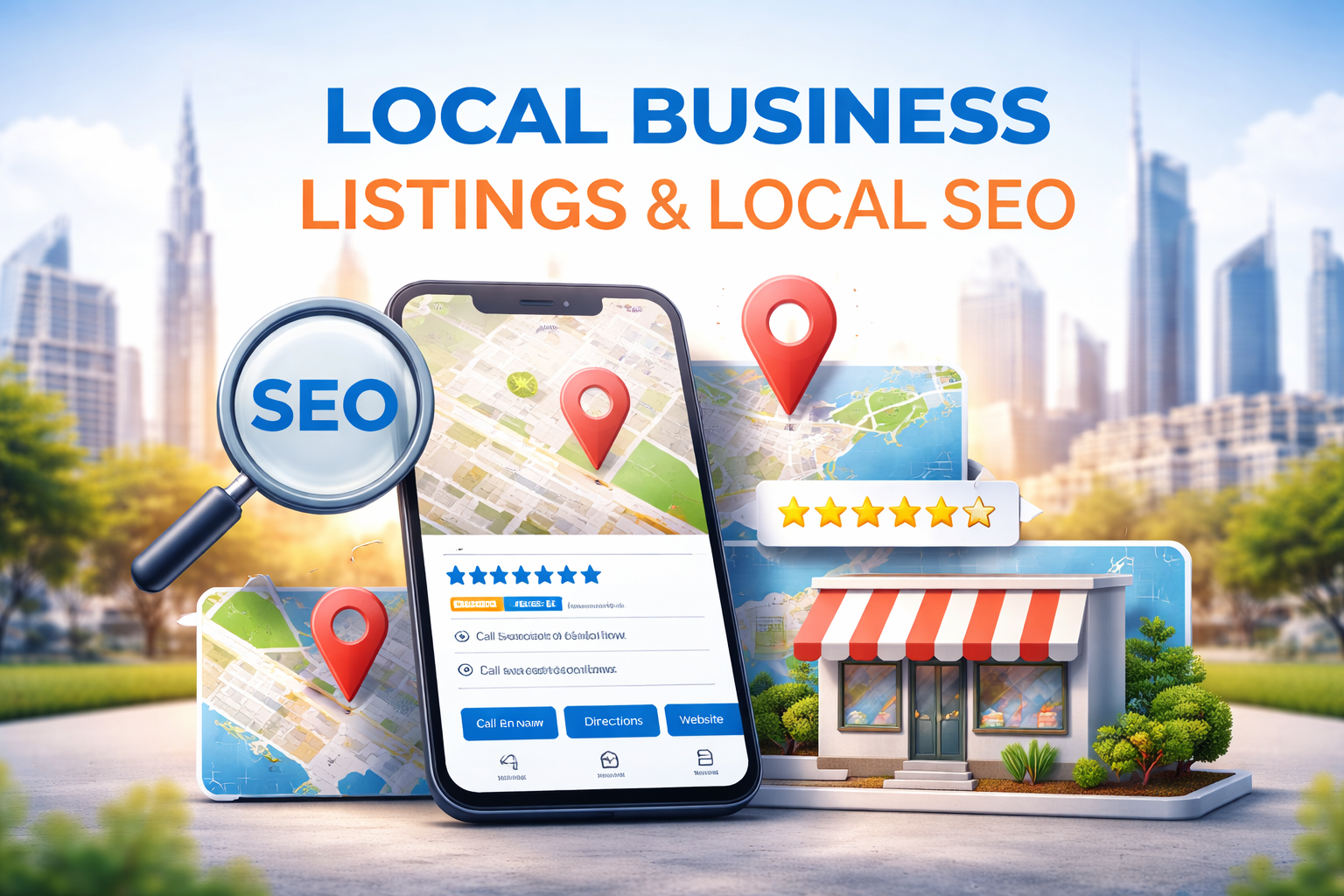
  • The Role of Local Business Listings in Local SEO

    The Role of Local Business Listings in Local SEO

    In today’s competitive digital landscape, local visibility can make or break a business. Whether you run a small café, a service-based company, or a multi-location brand, appearing in local search results is essential for attracting nearby customers. One of the most powerful yet often overlooked tools for improving local search visibility is local business listings. These listings play a critical role in local SEO, helping businesses connect with customers at the exact moment they are searching for relevant products or services.

    This article explores the importance of local business listings, how they impact local SEO, and why maintaining accurate listings—especially in competitive markets like business listing Dubai—is crucial for long-term success.

    What Are Local Business Listings?

    Local business listings are online profiles that contain essential information about a business, such as:

    • Business name
    • Address
    • Phone number (NAP)
    • Website URL
    • Business hours
    • Categories and services
    • Photos and customer reviews

    These listings appear on platforms such as Google Business Profile, Bing Places, Apple Maps, Yelp, Facebook, and local directories. For businesses targeting specific regions or cities, accurate listings ensure that search engines and customers can easily find and trust your business.

    Why Local Business Listings Matter for Local SEO

    Local SEO focuses on optimizing a business’s online presence to attract customers from relevant local searches. Business listings act as trust signals for search engines like Google, helping them verify that your business is legitimate, active, and relevant to local users.

    Here’s how listings directly impact local SEO:

    1. Improved Local Search Visibility

    Search engines rely heavily on business listings to determine which businesses appear in local map packs and “near me” searches. When your business information is consistent and optimized across platforms, it increases your chances of ranking higher in local results.

    For example, businesses that maintain accurate profiles across directories related to business listing Dubai often gain better exposure in searches targeting the UAE market.

    2. Consistent NAP Builds Trust

    NAP consistency (Name, Address, Phone Number) is one of the most important local SEO ranking factors. Even small inconsistencies—such as different phone numbers or spelling variations—can confuse search engines and reduce trust.

    Consistent listings across all platforms help search engines confidently display your business in relevant local searches, improving both rankings and click-through rates.

    3. Increased Website Traffic and Footfall

    Local business listings don’t just improve rankings—they drive real-world results. Many users rely on listings to:

    • Get directions
    • Make phone calls
    • Visit websites
    • Read reviews before visiting

    For service providers and retail businesses, especially in high-competition markets like Dubai, optimized listings help convert online searches into physical visits and inquiries.

    The Importance of Business Listings in Competitive Markets

    Cities with dense business environments, such as Dubai, present unique challenges and opportunities. Thousands of companies compete for attention across industries, making business listing Dubai optimization a vital part of any digital marketing strategy.

    Local directories and region-specific platforms help businesses stand out by:

    • Targeting location-based searches
    • Reaching users searching in specific neighborhoods
    • Appearing in Arabic and English search queries
    • Supporting mobile and voice search results

    In such competitive markets, businesses that actively manage and optimize their listings consistently outperform those that neglect them.

    How Business Listings Influence Google’s Local Ranking Factors

    Google uses three main factors to determine local rankings:

    1. Relevance

    How well your business matches the search query. Optimized categories, descriptions, and keywords in your listings help improve relevance.

    2. Distance

    How close your business is to the searcher’s location. Accurate address data ensures your business appears for nearby users.

    3. Prominence

    How well-known and trusted your business is. Reviews, ratings, citations, and listing completeness all contribute to prominence.

    Strong local business listings improve all three of these factors simultaneously.


    The Role of Reviews in Local Business Listings

    Customer reviews are a major component of local SEO success. Listings with frequent, high-quality reviews tend to rank higher and attract more clicks.

    Benefits of reviews include:

    • Improved trust and credibility
    • Higher engagement rates
    • Better local rankings
    • Increased conversions

    Actively responding to reviews—both positive and negative—also signals to search engines that your business is active and customer-focused.

    Optimizing Local Business Listings for SEO

    To maximize the SEO impact of your listings, follow these best practices:

    1. Complete Every Field

    Fill out all available sections, including services, business descriptions, and attributes.

    2. Use Local Keywords Naturally

    Incorporate location-based keywords where appropriate, such as business listing Dubai, without keyword stuffing.

    3. Add High-Quality Images

    Photos improve engagement and help your listing stand out in search results.

    4. Keep Information Updated

    Update listings immediately when business hours, contact details, or locations change.

    5. Monitor and Manage Multiple Listings

    Duplicate or incorrect listings can harm rankings. Regular audits help maintain accuracy.

    Local Citations and Their SEO Impact

    A local citation is any online mention of your business’s NAP information. Business listings are the most common form of citations. The more consistent and authoritative your citations are, the stronger your local SEO performance becomes.

    High-quality citations from trusted directories reinforce your business’s legitimacy and location relevance, which is particularly important for competitive regions like Dubai.

    Mobile and Voice Search Benefits

    With the rise of mobile and voice search, local listings have become even more critical. Searches such as “best service near me” or “business open now” rely heavily on business listing data.

    Optimized listings help your business appear in:

    • Mobile map results
    • Voice assistant responses
    • Instant call and navigation searches

    This makes business listings a key driver of modern local discovery.


    Common Mistakes to Avoid

    Many businesses fail to see results from local listings due to avoidable errors, such as:

    • Inconsistent NAP details
    • Ignoring customer reviews
    • Leaving listings incomplete
    • Failing to update changes
    • Creating duplicate listings

    Avoiding these mistakes ensures your listings work as an asset rather than a liability.

    Conclusion

    Local business listings are a cornerstone of effective local SEO. They help search engines verify your business, improve visibility in local searches, and drive qualified traffic both online and offline. In highly competitive regions, optimizing and maintaining listings—especially for business listing Dubai—is not optional; it’s essential.

    By focusing on accuracy, consistency, customer engagement, and ongoing optimization, businesses can leverage local listings to build trust, improve rankings, and stay ahead of the competition in their local market.


  • How AI is Changing Local SEO in Australia (2026 Guide)

    How AI is Changing Local SEO in Australia (2026 Guide)

    Local SEO in Australia has undergone a massive transformation in recent years—and in 2026, artificial intelligence (AI) is at the center of it all. What used to be about keywords, backlinks, and Google Business Profiles has evolved into a smarter, intent-driven ecosystem powered by AI.

    From AI-generated search results to hyperlocal targeting, businesses must rethink their strategies to stay visible. In this guide, we’ll explore how AI is reshaping local SEO in Australia and what you need to do to stay ahead.

    The Rise of AI in Australian Search

    Australia is one of the leading countries in adopting AI-driven search experiences. Features like AI-generated answers (Google AI Overviews) now appear in a large percentage of searches, fundamentally changing how users interact with search engines.

    Instead of browsing multiple websites, users now get instant, summarised answers directly on the search results page. This has led to:

    • Increased zero-click searches
    • Reduced website traffic
    • Greater importance of being featured in AI responses

    For local businesses, this means visibility is no longer just about ranking #1—it’s about being trusted and cited by AI systems.

    1. From Keywords to Intent & Context

    Traditional local SEO relied heavily on keyword optimization like “plumber Sydney” or “dentist Melbourne.”

    In 2026, AI understands user intent, behavior, and context better than ever.

    AI systems now analyze:

    • Search history
    • Location data
    • Real-time needs
    • Conversational queries

    This means businesses must focus on:

    • Answering real questions
    • Creating helpful, intent-based content
    • Providing clear service information

    2. AI-Powered Local Search & Maps

    Google Maps and local search are no longer static—they are AI-driven and predictive.

    AI now:

    • Suggests businesses based on behavior
    • Predicts what users need before they search
    • Delivers hyper-personalized results

    This shift has led to “micro-local SEO”, where visibility depends on very specific locations rather than broad regions.

    Example: Instead of ranking for “SEO agency Sydney,” businesses now compete for neighborhood-level searches.

    3. The Rise of Hyperlocal Targeting

    AI has taken local targeting to the next level.

    Search engines now focus on:

    • Exact neighborhoods
    • User proximity
    • Real-time availability

    This concept is often called micro-market dominance, where businesses dominate smaller geographic pockets instead of entire cities.

    What this means:

    • Location pages must be highly specific
    • Content should include local landmarks and areas
    • Service areas must be clearly defined

    4. AI Overviews & Zero-Click Searches

    AI Overviews are one of the biggest disruptions in SEO.

    These AI-generated summaries:

    • Appear at the top of search results
    • Provide direct answers
    • Reduce the need to click on websites

    Studies show:

    • CTR for top results has dropped significantly
    • Some websites have seen 20–60% traffic declines

    New Goal: Get Cited, Not Just Ranked

    To win in 2026, your content must:

    • Be structured for AI extraction
    • Provide clear, concise answers
    • Demonstrate authority and trust

    5. Entity-Based SEO is the New Standard

    AI no longer relies on keywords alone—it focuses on entities.

    An entity can be:

    • A business
    • A location
    • A service

    Search engines now evaluate:

    • Who you are
    • What you offer
    • Where you operate

    This is called entity clarity, and it’s critical for local SEO success.

    How to improve entity SEO:

    • Use structured data (schema markup)
    • Keep NAP (Name, Address, Phone) consistent
    • Build strong brand mentions across platforms

    6. AI-Powered Business Listings

    Modern business directories are now powered by AI.

    Instead of static listings, they:

    • Analyze customer behavior
    • Use reviews and engagement signals
    • Deliver personalized recommendations

    This means your listings must be:

    • Fully optimized
    • Frequently updated
    • Rich in reviews and media

    AI evaluates quality and relevance, not just presence.

    7. Multi-Platform Local SEO (Beyond Google)

    In 2026, local SEO is no longer limited to Google.

    AI pulls data from:

    • Social media platforms
    • Review websites
    • Video platforms
    • Third-party mentions

    In fact, younger users increasingly rely on platforms like Instagram and TikTok for local discovery.

    Key takeaway:

    You must build visibility across multiple platforms—not just search engines.

    8. AI Content: Opportunity vs Risk

    AI tools have made content creation faster—but quality matters more than ever.

    What works:

    • Human-edited AI content
    • Local insights and examples
    • Helpful, intent-driven content

    What doesn’t:

    • Generic AI-generated blogs
    • Thin or duplicate content

    AI search systems prioritize:

    • Expertise
    • Trust
    • Real-world relevance

    9. Voice & Conversational Search Growth

    With AI assistants and conversational search rising, users now search like this:

    • “Best café near me open now”
    • “Affordable dentist in Brisbane with good reviews”

    This means:

    • Content must be conversational
    • FAQs are more important than ever
    • Long-tail queries dominate

    10. The Shift to “Answer Engine Optimization” (AEO)

    SEO is evolving into AEO (Answer Engine Optimization).

    Instead of optimizing for rankings, businesses must optimize for:

    • Featured answers
    • AI-generated summaries
    • Voice search responses

    AEO Strategy Includes:

    • Clear headings and structured content
    • Direct answers to questions
    • High-quality, authoritative information

    How to Adapt Your Local SEO Strategy in 2026

    To succeed in AI-driven local SEO in Australia, focus on:

    Content Strategy

    • Create helpful, question-based content
    • Add local insights and real examples

    Technical SEO

    • Implement structured data
    • Improve site speed and mobile UX

    Local Signals

    • Optimize Google Business Profile
    • Build consistent NAP citations
    • Collect and manage reviews

    Authority Building

    • Get featured on trusted websites
    • Build brand mentions
    • Focus on E-E-A-T

    AI Optimization

    • Structure content for AI extraction
    • Focus on clarity and relevance
    • Think beyond rankings

    Final Thoughts

    AI is not just changing local SEO in Australia—it’s redefining it.

    The focus has shifted from:
    Rankings → Visibility
    Keywords → Intent
    Traffic → Trust & Authority

    Businesses that adapt to AI-first search will gain a competitive edge, while those relying on outdated SEO tactics risk becoming invisible.

    Pro Tip

    If you want to stay ahead, start optimizing for AI visibility today—because in 2026, being found by AI is just as important as being found on Google.